
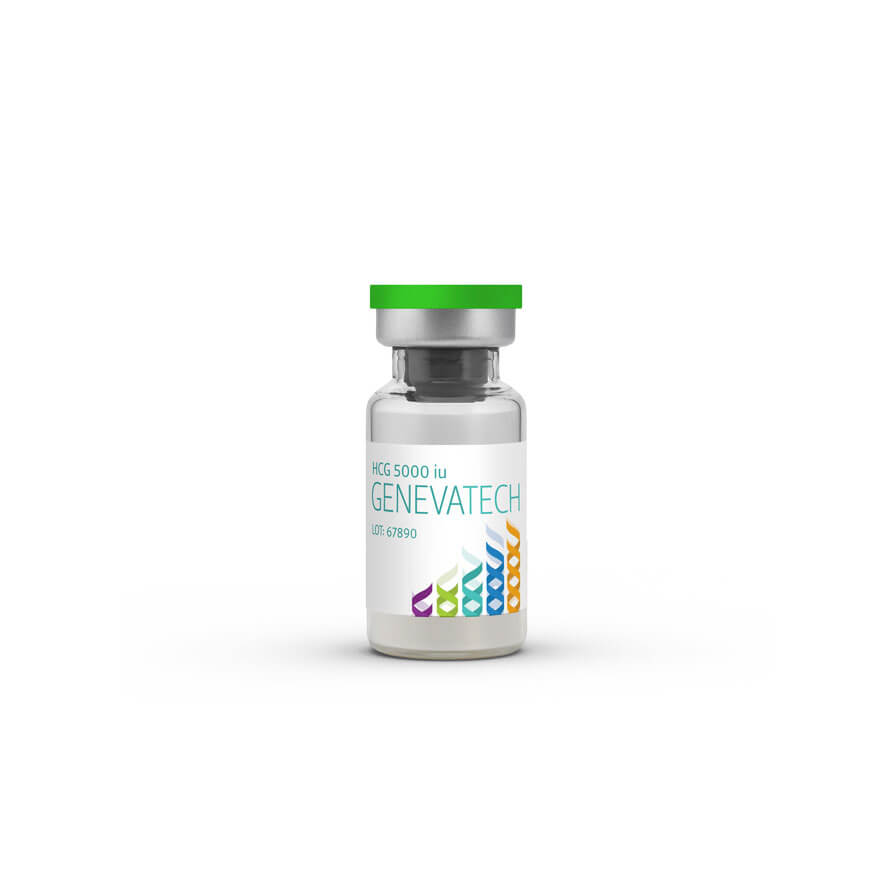
Description
Buy HCG online Australia
Buy HCG online Australia Human chorionic gonadotropin (hCG)a growing embryo (syncytiotrophoblast initially), which eventually forms the placenta after implantation.[1][2] The presence of hCG is detected in some pregnancy tests (HCG pregnancy strip tests). Some cancerous tumors produce this hormone; therefore, elevated levels measured when the patient is not pregnant may lead to a cancer diagnosis and, if high enough, paraneoplastic syndromes, however, it is unknown whether this production is a contributing cause or an effect of carcinogenesis. The pituitary analog of hCG, known as luteinizing hormone (LH), is produced in the pituitary gland of males and females of all ages.[1][3]
Beta-hCG is initially secreted by the syncytiotrophoblast.[1]
Structure
[edit]
Human chorionic gonadotropin is a glycoprotein composed of 237 amino acids with a molecular mass of 36.7 kDa, approximately 14.5kDa αhCG and 22.2kDa βhCG.[4]
It is heterodimeric, with an α (alpha) subunit identical to that of luteinizing hormone (LH), follicle-stimulating hormone (FSH), thyroid-stimulating hormone (TSH), and a β (beta) subunit that is unique to hCG.
- The α (alpha) subunit is 92 amino acids long.[5]
- The β-subunit of hCG gonadotropin (beta-hCG) contains 145 amino acids, encoded by six highly homologous genes that are arranged in tandem and inverted pairs on chromosome 19q13.3 – CGB (1, 2, 3, 5, 7, 8). It is known that CGB7 has a sequence slightly different from that of the others.[6]
The two subunits create a small hydrophobic core surrounded by a high surface area-to-volume ratio: 2.8 times that of a sphere. The vast majority of the outer amino acids are hydrophilic.[7]
beta-hCG is mostly similar to beta-LH, with the exception of a Carboxy Terminus Peptide (beta-CTP) containing four glycosylated serine residues that is responsible for hCG’s longer half-life.[8]
Buy HCG online Australia
[edit]
Human chorionic gonadotropin interacts with the LHCG receptor of the ovary and promotes the maintenance of the corpus luteum for the maternal recognition of pregnancy at the beginning of pregnancy. This allows the corpus luteum to secrete the hormone progesterone during the first trimester. Progesterone enriches the uterus with a thick lining of blood vessels and capillaries so that it can sustain the growing fetus.[9]
It has been hypothesized that hCG may be a placental link for the development of local maternal immunotolerance.[10] For example, hCG-treated endometrial cells induce an increase in T cell apoptosis (dissolution of T cells). These results suggest that hCG may be a link in the development of peritrophoblastic immune tolerance, and may facilitate the trophoblast invasion, which is known to expedite fetal development in the endometrium.[11] It has also been suggested that hCG levels are linked to the severity of morning sickness or hyperemesis gravidarum in pregnant women.[12]
Because of its similarity to LH, hCG can also be used clinically to induce ovulation in the ovaries as well as testosterone production in the testes. As the most abundant biological source is in women who are presently pregnant, some organizations collect urine from pregnant women to extract hCG for use in fertility treatment.[citation needed]
Human chorionic gonadotropin also plays a role in cellular differentiation/proliferation and may activate apoptosis.[citation needed]
Production
[edit]
Naturally, it is produced in the human placenta by the syncytiotrophoblast.[1]
Like any other gonadotropins, it can be extracted from the urine of pregnant women or produced from cultures of genetically modified cells using recombinant DNA technology.
In Pubergen, Pregnyl, Follutein, Profasi, Choragon and Novarel, it is extracted from the urine of pregnant women. In Ovidrel, it is produced with recombinant DNA technology.[13]
hCG forms
[edit]
Three major forms of hCG are produced by humans, with each having distinct physiological roles. These include regular hCG, hyperglycosylated hCG, and the free beta-subunit of hCG. Degradation products of hCG have also been detected, including nicked hCG, hCG missing the C-terminal peptide from the beta-subunit, and free alpha-subunit, which has no known biological function. Some hCG is also made by the pituitary gland with a pattern of glycosylation that differs from placental forms of hCG.[1]
Regular hCG is the main form of hCG associated with the majority of pregnancy and in non-invasive molar pregnancies. This is produced in the trophoblast cells of the placental tissue. Hyperglycosylated hCG is the main form of hCG during the implantation phase of pregnancy, with invasive molar pregnancies, and with choriocarcinoma.[14]
Gonadotropin preparations of hCG can be produced for pharmaceutical use from animal or synthetic sources.[citation needed]
Reviews
There are no reviews yet.